
We are a global operator of essential infrastructure








Marine Forest Initiative
Almost a thousand schoolchildren in Mallorca researched Posidonia this academic year thanks to the Marine Forest educational programme
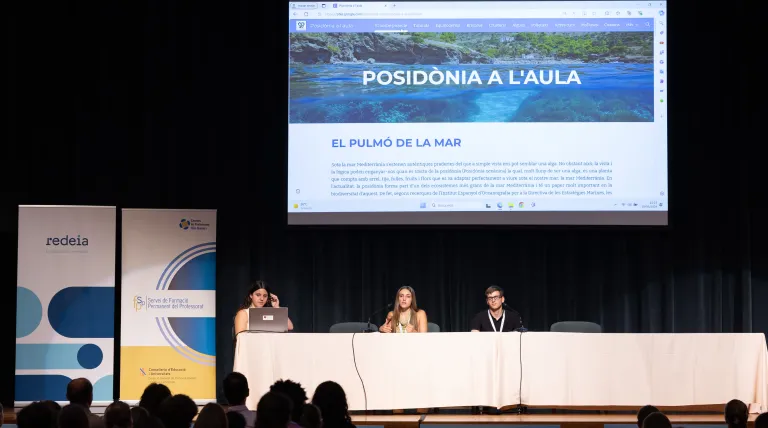
- Around 300 students, representing all the schoolchildren, presented their research projects and proposals at a knowledge forum on Posidonia as part of the “Posidònia a l’Aula” (Posidonia in the Classroom) programme.
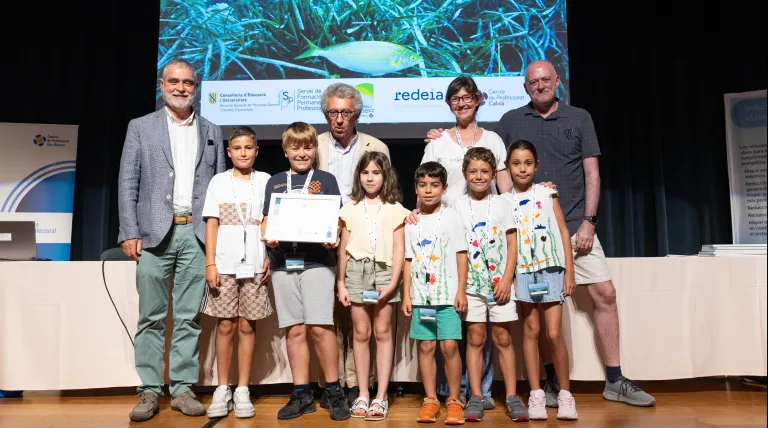
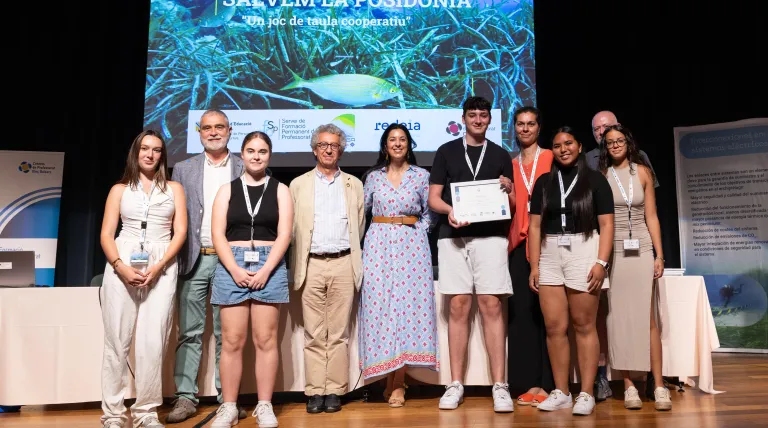
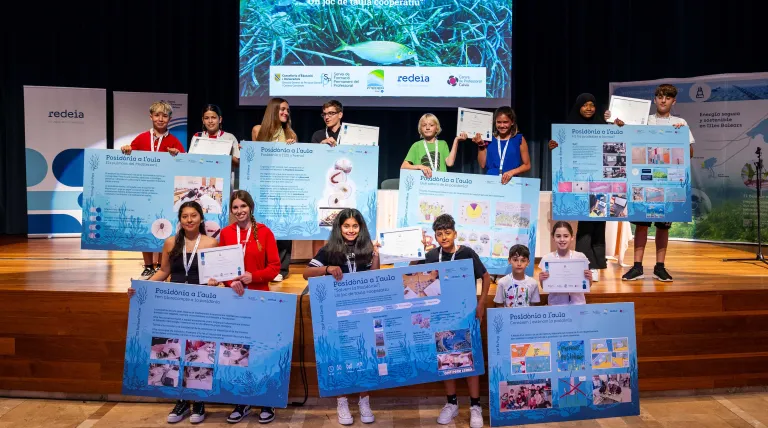
- The ten centres that participated in the programme during the 2023–24 school year received a distinction as “Posidonia Centres” at the Universitat de les Illes Balears.
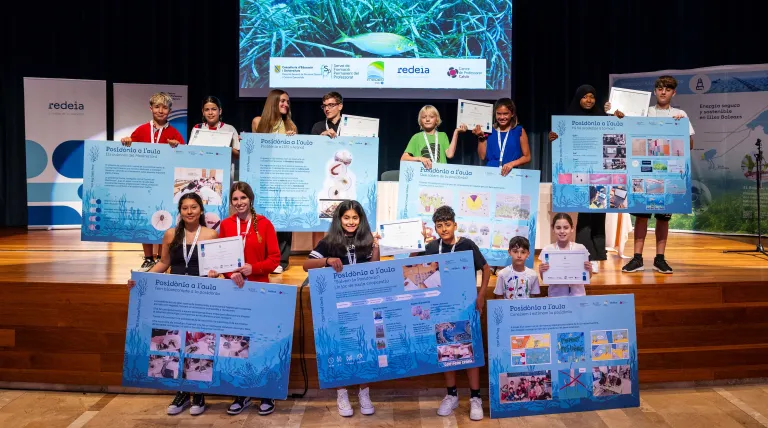
Around 300 schoolchildren from Mallorca participated this Tuesday in a scientific gathering where they presented their proposals on Posidonia oceanica. The projects are the result of research carried out by a total of 971 students across ten schools and institutes on the island throughout the 2023–2024 academic year, as part of the “Posidònia a l’Aula” educational programme. This initiative is promoted by Redeia in collaboration with the Spanish National Research Council (CSIC), through the Mediterranean Institute for Advanced Studies (IMEDEA), and the Calvià Teacher Training Centre of the Ministry of Education and Universities.
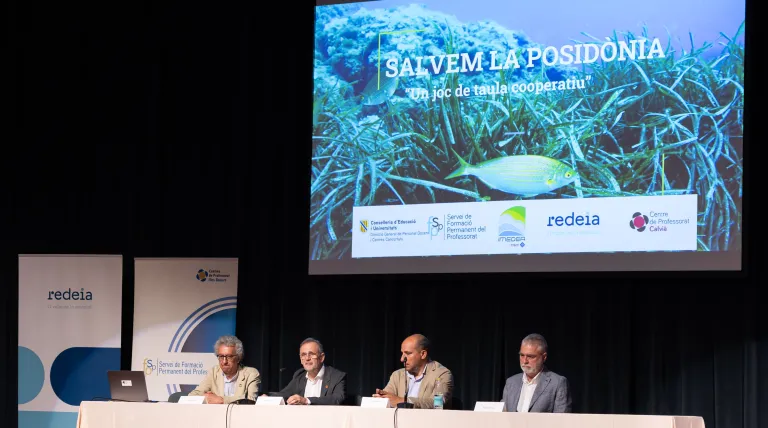
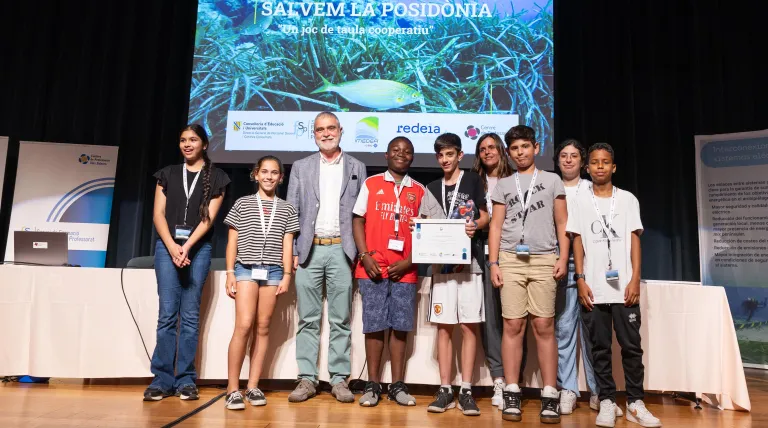
All the educational centres that took part in “Posidònia a l’aula” this year were recognised today as “Posidonia Centres” and received an accrediting diploma during an event held at the Universitat de les Illes Balears (UIB) campus. Here, the students took centre stage as “delegates” at a knowledge forum dedicated to Posidonia. They presented their research to an attentive audience that included the Rector of the UIB, Jaume Carot; the Director General of Teaching Staff of the Ministry of Education and Universities of the Government of the Islas Baleares, Ismael Alonso; IMEDEA researcher Jorge Terrados; Redeia’s Sustainability Director, Antonio Calvo; and Redeia’s manager in the Islas Baleares, Eduardo Maynau.
Driving a project like the Marine Forest responds to Redeia’s 2030 Sustainability Commitment, which seeks to conserve biodiversity, combat climate change, and contribute to social development.
In this context, “Posidònia a l’Aula” is the educational branch of Redeia’s Marine Forest, a project that began in 2012 with a research phase and subsequently in 2018 with the planting of more than 13,000 fragments. This has enabled the recovery of two hectares of Posidonia meadow in the waters of Pollença Bay, with a survival rate currently exceeding 90%.
From its inception, Redeia’s Marine Forest project – developed alongside IMEDEA experts – has aimed to promote environmental recovery and biodiversity, while simultaneously serving as a platform for scientific and educational outreach. It has become a “living laboratory” open to the national and international scientific community, and an educational tool to raise awareness among future generations about the need to preserve biodiversity, with Posidonia as the focal point.
Through “Posidònia a l’Aula”, students can connect with Posidonia and learn everything about this endemic Mediterranean plant, as well as the biodiversity it generates and shelters. As their education progresses, they become aware – through knowledge and appreciation – of the critical need to recover and conserve Posidonia, both to preserve marine ecosystems and as a natural agent in the fight against climate change.
The “Posidònia a l’Aula” programme, directed by IMEDEA and involving teachers from the centres who have been specifically trained for its implementation, introduces students to research starting with an aquarium containing Posidonia fragments installed in their classroom, teaching them to delve deeper into marine biodiversity.
It is aimed at Primary, Secondary (ESO), and Baccalaureate students, with the training adapted to each of these educational stages. During this academic year, Posidonia aquariums reached centres in Esporles (the primary school where teachers Xavi and Ferran Morell first conceived the idea of educating schoolchildren about Posidonia), Sóller, Calvià, Andratx, and Palma.
POSIDONIA PROJECTS
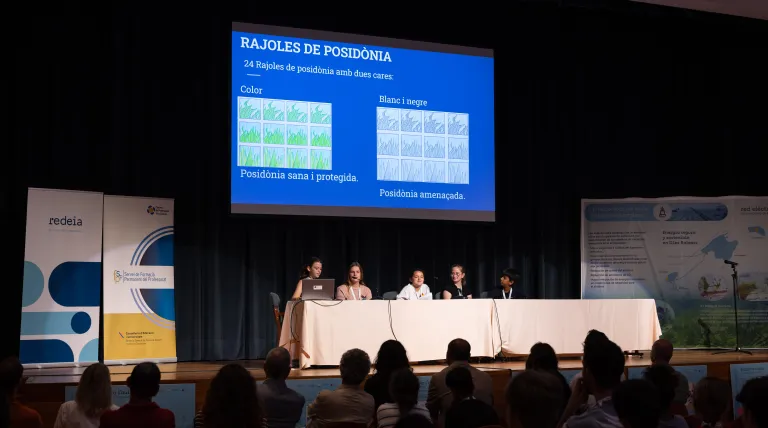
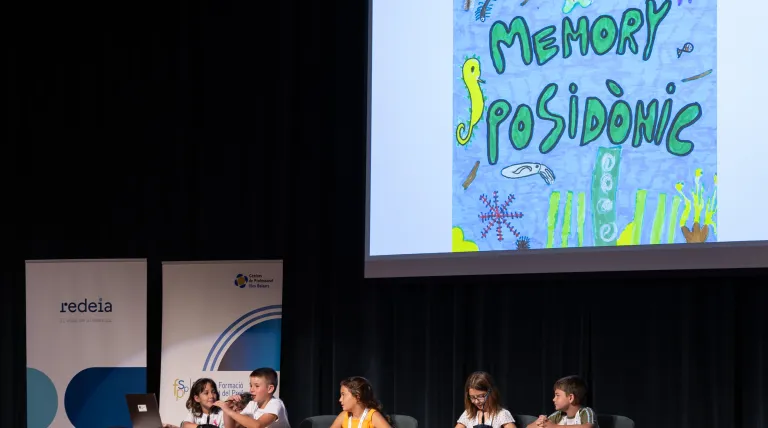
A portion of the participants presented their work today as papers. For example, students from IES S’Arenal presented their website featuring information on the characteristics of Posidonia and the living organisms observed. Second and fourth-year primary students from CEIP Es Puig showcased a comic and a memory game they designed about Posidonia and the threats it faces.
“The Lungs of the Mediterranean” is the project from the Sant Pere school, which highlights the importance of Posidonia for the health of marine ecosystems. Under the title “Are there meadows in the sea?”, first-year ESO students from IES Josep Sureda i Blanes focused on identifying the “inhabitants” of the Posidonia meadows. Fourth-year ESO students at IES Baltasar Porcel even developed basic descriptive statistical treatments using data obtained from their research: “Posidonia Biocount”.
Finally, fifth-year primary schoolchildren from CEIP Gabriel Comas created interesting information cards about Posidonia and the dangers threatening it, highlighting, for instance, its crucial role in protecting beaches. At CEIP Pere Cerdà, they created a board game titled “Let's save Posidonia”, and at La Miraculosa, they even dared to delve into the influence of climate change and future predictions for Mediterranean marine ecosystems. IES de Calvià and IES Guillem Sagrera complete the list of centres that also followed the “Posidònia a l’Aula” programme this year.
Driving a project like the Marine Forest responds to Redeia’s 2030 Sustainability Commitment, which seeks to conserve biodiversity, combat climate change, and contribute to social development.
Downloads