

We are a global operator of essential infrastructure










General Shareholders’ Meeting
Red Eléctrica unveils a new suite of measures to further strengthen the Spanish electricity system
- The SO has submitted proposals to the CNMC and MITECO regarding monitoring and information-submission requirements for incident analysis, balancing services and technical constraint scheduling, as well as coordination between transmission grid and distribution network development.
- Corredor and García Merino reaffirm the role of the TSO as a guarantor of the energy and industrial transition and highlight the 2026–2029 Strategic Plan, which features an unprecedented investment cycle to deliver the next Electricity Transmission Grid Plan.
- The General Shareholders’ Meeting, held today with a quorum of 64.318%, approved all items on the agenda by a large majority.
- The company will pay a supplementary gross dividend of €0.60 per share on 1 July, charged to 2025 results, in addition to the interim dividend paid in January.
Red Eléctrica has presented a new suite of measures aimed at strengthening the electricity system following the incident on 28 April. In doing so, the System Operator (SO) is responding to government mandates that entrusted it with new tasks and responsibilities. Many of these measures had already been anticipated by Red Eléctrica in its 18 June analysis.
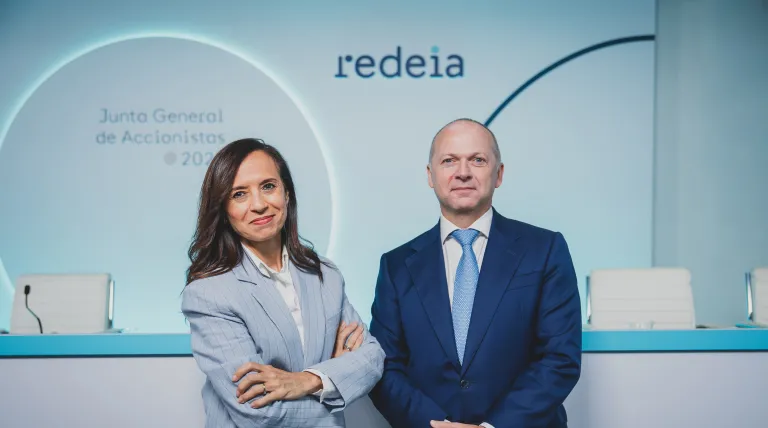
The announcement was made today by Beatriz Corredor, Chairwoman of Redeia, during her speech at the General Shareholders’ Meeting. “We see this as a sign of confidence in the rigour and neutrality of the SO,” she stated, stressing that “Red Eléctrica did not fail.” Corredor reaffirmed her “full confidence in Red Eléctrica’s teams and the fulfilment of their duties before, during and after the blackout, with the regulatory framework serving as their guide for action.”
The Chairwoman confirmed that the company has already demonstrated this in the submissions it has already presented in response to the disciplinary proceedings initiated by the CNMC. During her speech, she recalled that: “time has proven us right, and all published official reports confirm, just as Red Eléctrica had anticipated, that this was an unprecedented, unforeseeable and multifactorial event.”
Measures for a transforming system
In recent days, the System Operator has submitted to the CNMC and the Ministry for the Ecological Transition and the Demographic Challenge a new suite of analyses and proposals. These include the minimum monitoring requirements for incident analysis and a procedure establishing how requested information should be submitted to the SO for incident analysis. The package also includes an analysis of the regulation governing balancing services and technical constraint scheduling to accommodate the system’s new operating conditions, as well as a proposed procedure to establish coordination between development of the transmission grid and distribution network.
These proposals complement those submitted by Red Eléctrica for public consultation at the end of April regarding a series of operating procedures. These cover the installation and configuration of oscillation damping systems, the establishment of voltage rate-of-change response mechanisms, and the definition of grid power injection requirements for generation facilities, including those related to stability.
Together, these initiatives advance the goal of equipping the system with new tools in areas that proved critical on 28 April, such as voltage control, adverse oscillations, facility disconnections, overvoltages in evacuation grids, voltage variations, and others. At the same time, Red Eléctrica continues enabling facilities under the new Operating Procedure 7.4 approved in June last year. As of 30 April, 14.5 GW were already providing voltage control services via setpoints, of which 6 GW correspond to generation from renewable energies.
Finally, Corredor argued that the implementation of all these measures – and ensuring greater certainty that all operators comply with their regulatory obligations – are essential to eliminate the so-called "reinforced scheduling." Up until the end of April, this mechanism has cost €711 million, representing 2% of total electricity system costs.
The TSO as a guarantor: unprecedented grid deployment
In their speeches, both the Chairwoman and the Group’s CEO championed the TSO’s role as a guarantor of the country’s energy and industrial transformation. This model, created in Spain in 1985 and subsequently adopted by all EU countries, has proven its effectiveness in management, operational security, investment efficiency and consumer savings. Spain’s TSO, Red Eléctrica, “ensures orderly grid development aligned with the country’s economic and social needs,” Beatriz Corredor noted.
In this context, Roberto García Merino highlighted Redeia’s new Strategic Plan through to 2029, which will be essential for implementing the next electricity planning cycle. To this end, the company announced historically high investment levels in the TSO, with average annual investment 70% higher than the average annual investment in Red Eléctrica under the previous strategic plan. Redeia is therefore launching the largest investment cycle in its history. In García Merino’s words: “By 2031, the entire grid plan, with an initially planned investment of €13.1 billion, will already be operational or underway. We estimate that by 2031, €11.1 billion worth of assets will be commissioned and €2 billion will still be in the execution phase, in a context of improvements to the regulatory framework governing permitting procedures,” García Merino stated.
Within the framework of this Strategic Plan, the CEO also recalled the group’s strong commitment to value creation for shareholders. In this sense, it has announced a sustainable and growing dividend policy with a clear roadmap to reaching €0.87 per share in 2029 – representing annual growth of 2% throughout the period. Today, the General Shareholders’ Meeting agreed to the payment of a dividend of €0.80 charged to 2025 results. This figure includes €0.20 per share that was paid on account this past 7 January and which should be deducted. Therefore, the supplementary dividend of €0.60 will be paid on 1 July.
Resolutions of the General Shareholders’ Meeting
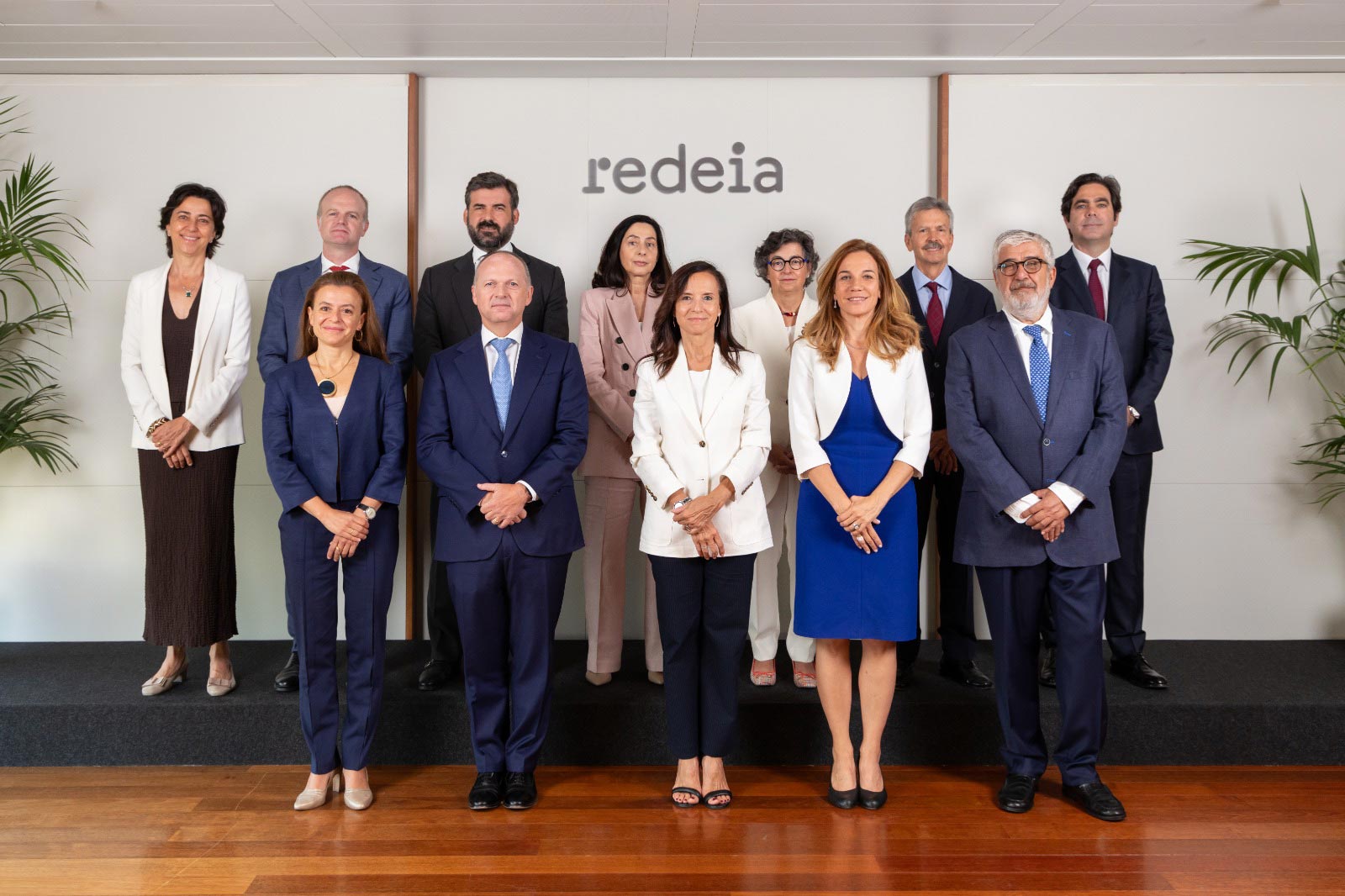
On this occasion, the Ordinary General Shareholders’ Meeting had a quorum of 64.318%, and all the resolutions proposed by the Board of Directors were approved. Among these resolutions, shareholders approved the appointment of Santiago Hurtado Iglesias and Marta María de la Cuesta González as new independent directors. Approval was also granted for the appointment of the legal entity Sociedad Estatal de Participaciones Industriales (SEPI), which in turn designated Mercedes Real Rodrigálvarez as its natural person representative, as well as for the appointment of José Luis Navarro Ribera. Both will serve as proprietary directors representing SEPI. These resolutions regarding the appointment of directors received approval rates of 97.84%, 97.86%, 84.84%, and 96.71%, respectively.
With these new members, the Board of Directors maintains a diverse composition of individuals with extensive experience, varied specialisations, and different professional backgrounds. It also reaffirms its commitment and leadership in gender equality, maintaining a balanced board.
As in previous years, this General Meeting is undergoing certification as a sustainable event in accordance with ISO 20121.
Downloads