We are a global operator of essential infrastructure









4th Pastoreo en las Redes Conference
Redeia and Enagás advance in measuring the ecosystem services of grazing with a view to their future remuneration
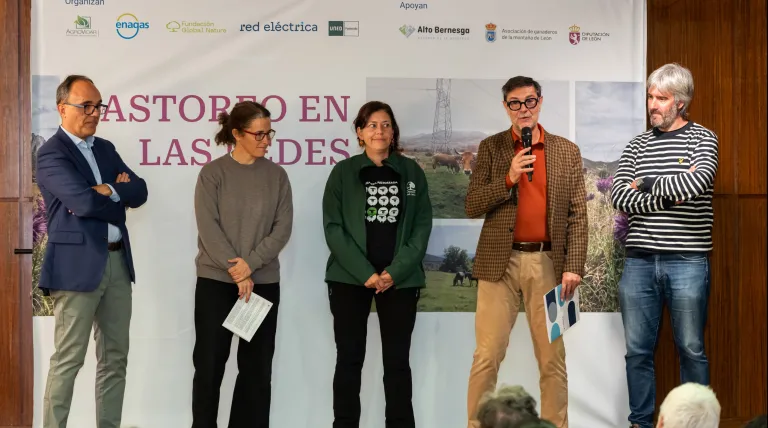
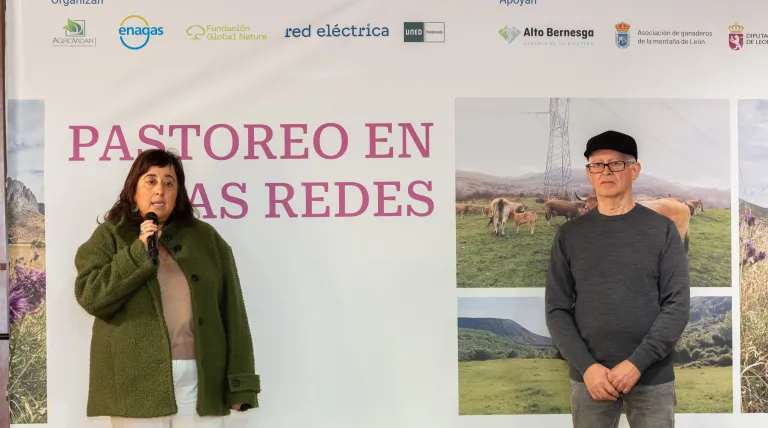
Yesterday and today, La Pola de Gordón (León) hosted the 4th Pastoreo en las Redes Conference (Grazing in the Grids), promoted by Redeia and Enagás and organised by Agrovidar in collaboration with Fundación Global Nature and the UNED Associated Centre in Ponferrada
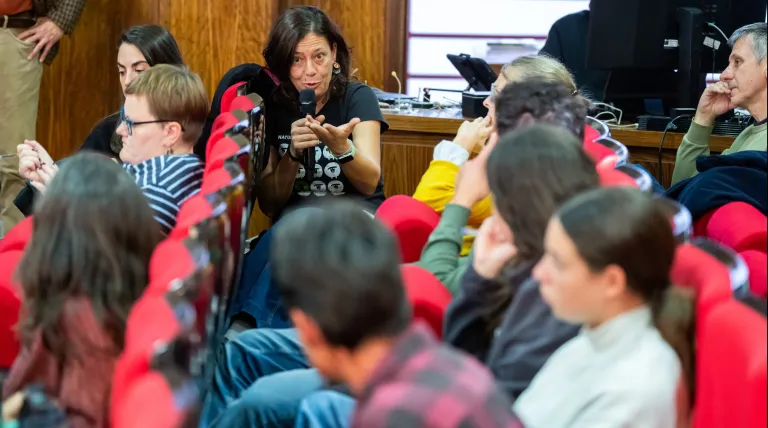
Livestock farmers, experts, researchers and organisations shared experiences and insights on how to calculate the value of, and remunerate, the services that extensive livestock farming provides to ecosystems and society
The ecosystem services generated by extensive livestock grazing – such as reducing biomass in forest environments and thereby preventing wildfires or increasing biodiversity – have real value, can be measured and can be eligible for financial compensation.
This is one of the conclusions of the 4th Pastoreo en las Redes Conference, an event promoted by Redeia and Enagás and organised by Agrovidar in collaboration with Fundación Global Nature and the UNED Associated Centre in Ponferrada, which brought together in La Pola de Gordón (León) livestock farmers, experts, researchers and organisations pioneering the assessment of the environmental benefits associated with extensive livestock management.
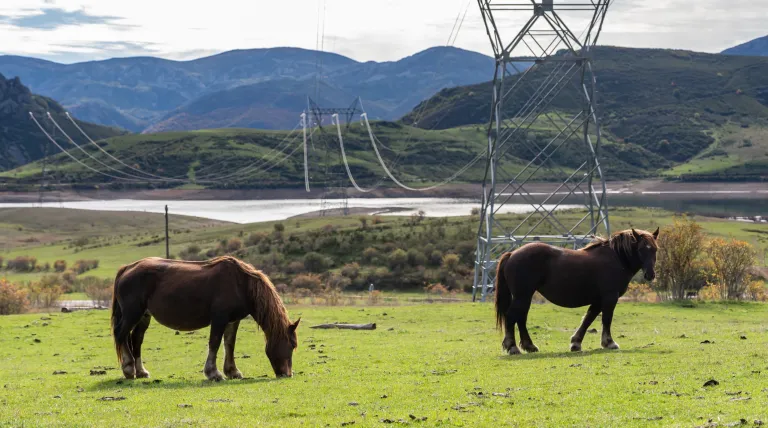
For the past five years, Redeia and Enagás – with technical support from Agrovidar and local livestock farmers, and as a complement to mechanical vegetation clearing – have used herds and flocks of cattle, sheep and horses to control the vegetation growing above gas infrastructure and beneath Red Eléctrica's electricity transmission grid in the central mountains of León. The initiative is accompanied by a comparative biodiversity study between grazed and ungrazed areas aimed at measuring the impact of livestock on vegetation and soil.
To date, the study has confirmed that plots managed through grazing host more plant species, more botanical families, a greater abundance of arthropods (a group that includes insects and other invertebrates that are vital for ecosystem functioning) and a high presence of pollinators (a group that includes bees, bumblebees and wasps). It has also found that grazing, combined with prior vegetation clearing, favours the predominance of herbaceous cover over woodland and scrubland, which ultimately translates into less plant fuel and fewer wildfires. The study, one of the few of its kind in Spain, is proving key to advancing in an emerging field: the objective measurement of the ecosystem services provided by extensive livestock farming and their financial compensation.
'Grazing generates environmental benefits that are not being sufficiently recognised. We need to stop viewing the extensive livestock sector solely as a food producer; it is also a land steward that generates public benefits: grazed herds and flocks prevent wildfires, conserve habitats, maintain the landscape and increase biodiversity. The debate must now focus on how to measure and financially remunerate these benefits. It is to this debate that Redeia aims to bring clarity and knowledge through this study on biodiversity in the mountains of León', said Redeia's Sustainability Director, Laura Quintana, during the conference.
Along the same lines, José Miguel Tudela, Director of Sustainability and Climate Action at Enagás, noted: 'Using grazing herds to manage vegetation along energy infrastructure, as a complement to mechanical vegetation clearing and in line with Enagás's global sustainability strategy, helps open up the landscape and create natural firebreaks across the territory – key factors in preventing wildfires or reducing their intensity once they have started.'
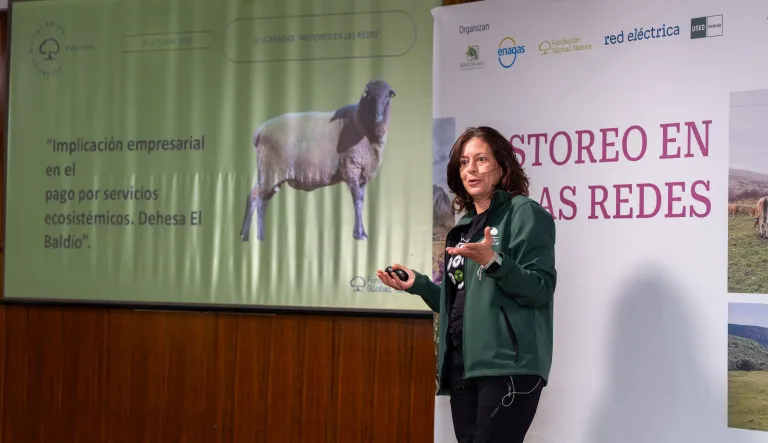
From Fundación Global Nature, Laura García, Head of Grazing, added: 'Thanks to initiatives such as the one we are carrying out at El Baldío, in Extremadura, we are seeing first-hand how sustainable livestock farming practices help maintain mosaic habitats, foster flora and fauna diversity and help conserve native livestock breeds. With these verifiable measurements of ecosystem services now on the table, we will be helping the livestock sector access new avenues of funding.'
Echoing this view, Juan Busqué, President of the Sociedad Española de Pastos (Spanish Pasture Society), delivered an opening keynote address on the Cantabrian Mountains, one of the main mountain ranges of the Iberian Peninsula, which provides and regulates essential resources for our survival. 'Livestock farming has been one of the most efficient means of utilising and conserving these mountains. Today, the situation is one of widespread abandonment, a lack of management and pessimism among both land users and managers. Large wildfires are partly a reflection of this', said Busqué, who expressed confidence that technologies based on electronic sensors, communications and AI will help improve pastoral and land management.
Three projects already measuring ecosystem services
The 4th Pastoreo en las Redes Conference showcased three initiatives that are already working to transform how the livestock sector is financially recognised for protecting ecosystems and biodiversity. One of them is the initiative by Red Eléctrica and Enagás in the mountains of León. Another is Fundación Global Nature's initiative at the El Baldío dehesa in Cáceres, a benchmark in the use of planned rotational grazing and regenerative management.
And the third is led by Orekan, the public company of the Government of Navarra specialising in environmental management and protection, which has designed a grant scheme under the 2023–2027 CAP Strategic Plan for high-nature-value hay meadows, whereby livestock farmers who apply receive payments scaled according to the biodiversity their meadows support. As explained by Silvia Zabalza, Head of the Agrodiversity and RDP Team, this is the only scheme of its kind nationwide based on payment for results.
Scrub encroachment: fuel for wildfires or feed for livestock?
The conference also spotlighted one of the problems driven by climate change that is increasing wildfire risk: scrub encroachment – that is, the spread of scrubland into areas previously dominated by pastureland, crops or open woodland, leading to greater wildfire intensity and faster spread when fires break out.
On this issue, Emmanuel Serrano, a researcher at the Faculty of Veterinary Medicine at the Autonomous University of Barcelona (UAB), spoke about a UAB research line aimed at turning scrub into a usable resource. Given that cattle naturally consume woody species, it is possible to design strategies to control scrub encroachment, reduce methane emissions and transform woody biomass into new animal feed ingredients, according to Serrano.
Meanwhile, Antoni Dalmau, a researcher at the Institute of Agrifood Research and Technology (IRTA) of the Regional Government of Catalunya, presented the Ovihuec project, which uses a municipal flock of sheep and goats alongside virtual fencing to open up the landscape and reduce wildfire risk in the municipality of Vilamós, Lleida.
The final session, led by Elisa Villén from the University of Alicante and Rocío Rosa from the Regional Agrifood Research and Development Service (SERIDA) of Asturias, focused on the risks posed to dung beetles (and consequently to the wider ecosystem) by systematically treating livestock with antiparasitic drugs. The researchers proposed alternative approaches to deworming livestock.
Field visit and primary school activity
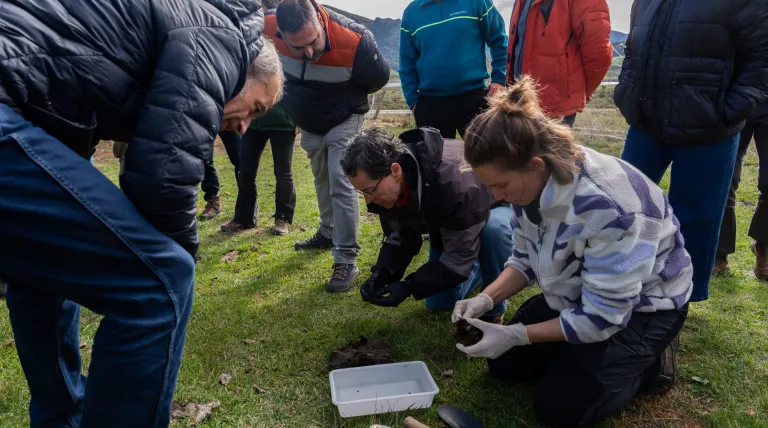
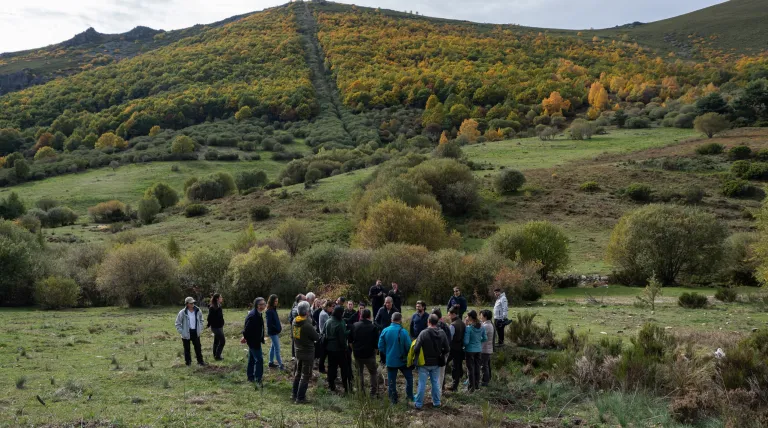
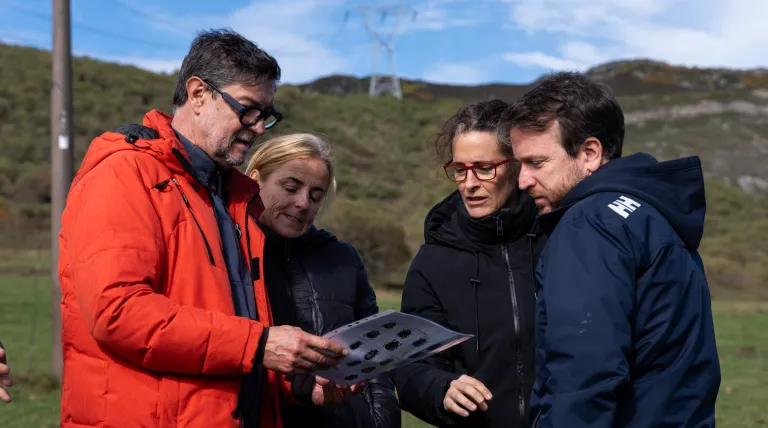
The conference included two activities to demonstrate in situ the positive impact of livestock grazing in the mountains of León. The first was a field visit to areas where Red Eléctrica and Enagás infrastructure is being grazed. Participants were able to see first-hand its effects in controlling the growth of woody vegetation and fostering greater biodiversity.
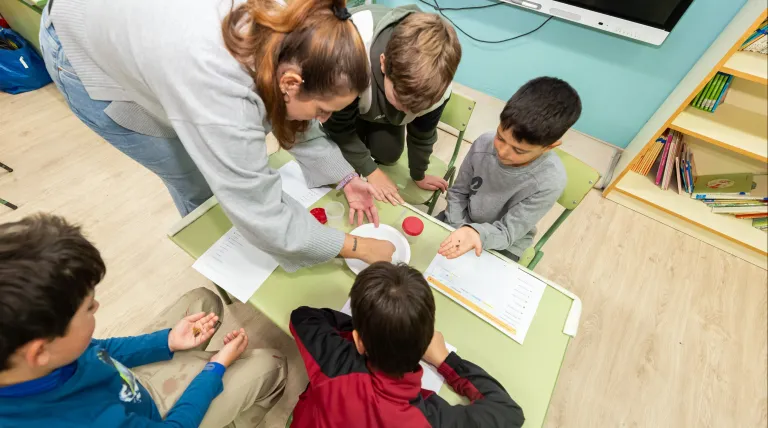
The second activity took place with pre-school and primary school pupils at the Federico García Lorca school in La Pola de Gordón, and consisted of a hands-on biodiversity measurement workshop. The children set up sampling traps and returned the following day to collect samples and identify and classify the insects found.
The 4th Pastoreo en las Redes Conference was supported by the Provincial Council of León, La Pola de Gordón Town Council, the Alto Bernesga Biosphere Reserve and the León Mountain Livestock Farmers' Association.