
We are a global operator of essential infrastructure











Protection and recovery of birdlife
GREFA released 7 specimens of Bonelli’s eagle in the Community of Madrid in 2025 with the support of Redeia
- This project to reintroduce the species in the Community of Madrid and other areas in the centre of the peninsula has also resulted in the successful birth of nine specimens in the wild, with a high survival rate.
- Redeia has been collaborating with GREFA for over 25 years on a number of projects for the study, protection and recovery of birdlife.
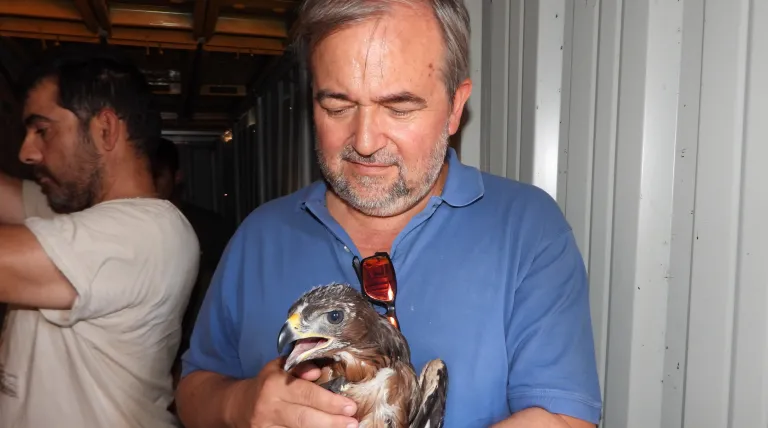
A total of seven specimens of Bonelli’s eagle —a large but very agile bird of prey also known in Spain as the partridge eagle (Aquila fasciata)—were released into the Cuenca Alta del Manzanares Regional Park in the Community of Madrid in 2025. This action was part of an initiative undertaken by Redeia and GREFA (Grupo de Rehabilitación de la Fauna Autóctona y su Habitat) to support the recovery of this species in the region and more generally in centre of the peninsula.
This project, which forms part of Redeia’s Comprehensive Impact Strategy, saw most of these young eagles soon take off on various routes across the peninsula, and five of them are still alive. These actions have enabled the current presence of a significant number of young specimens of Bonelli’s eagle prepared to be able to establish territories and mate, which is a positive sign for the future of the species.
The collaboration also includes the use of monitoring equipment, with high-resolution cameras in nests and tracking specimens using GPS/GSM, improved teaching facilities for education about the species in the GREFA installations and initiatives for scientific reporting.
At the same time, GREFA’s work has resulted in the released individuals giving birth to new specimens in recent years. Despite the highly unfavourable weather conditions in 2025, nine Bonelli’s eagle chicks were born in different zones, helping to create connections between the dispersed populations. Seven of these chicks managed to fly and are still alive.
A recovering species
The latest developments observed by GREFA indicate that the recovery of the species in the region is close to consolidation: the positive trend of releases and births in the wild in recent years has inspired optimism about the prospects for this species’ situation in the near future.
The population of Bonelli’s eagle in Spain declined sharply in the north of the peninsula from the 1980s, especially in Madrid. GREFA carried out a viability study for reintroducing the species in 2007, then achieved a milestone only two years later: the reproduction of captive specimens through natural births, without resorting to artificial means. To date, GREFA has removed and bred a total of 30 chicks from nests.
The first specimen of Bonelli’s eagle was released in 2010 in the Special Conservation Zone of Cuencas de los Ríos Alberche y Cofio. There were two specimens that GREFA bred in captivity that were the first of this species in Europe using the hacking method, which would later evolve into the more efficient 'cage hacking' technique, a system which ensured that the eagles were ready to survive in the wild and so reduce the high mortality rate that occurred in the period immediately following their release, thereby increasing the birds’ chances of survival.
Preserving birdlife
This agreement is part of the collaboration stretching back over 25 years between GREFA and Red Eléctrica, the company responsible for the operation and transmission of the electricity system. It is one more example of the company’s commitment to birdlife as shown in its collaboration in actions and agreements with a number of environmental organisations to ensure a positive relation between its infrastructures and the birds and biodiversity found in Spain and Latin America.
In particular, Redeia has maintained agreements in recent years with various entities to protect Bonelli’s eagle across the whole country, including a project with Mallorca’s Natura Parc Fundación to ensure that six birds of this species can safely use the structures of Red Eléctrica’s infrastructure, which three of them continue to do on a regular basis.
Redeia has also collaborated on other outstanding birdlife projects for the conservation of the Egyptian vulture in Andalusia, the recovery of the black vulture in the Boumort Hunting Reserve in Lleida, where there are 20 breeding pairs, and the Sierra de la Demanda in Burgos, the golden eagle in Galicia and the bearded vulture in the north of the peninsula, as well as collaborating in work to raise awareness and environmental education.