

We are a global operator of essential infrastructure










Redeia, Fundación Renovables and the Renewables Grid Initiative partner to design methodology for grid development based on active local engagement
- The initiative builds on Redeia’s long-standing collaboration with local communities to advance the energy transition process with social legitimacy.
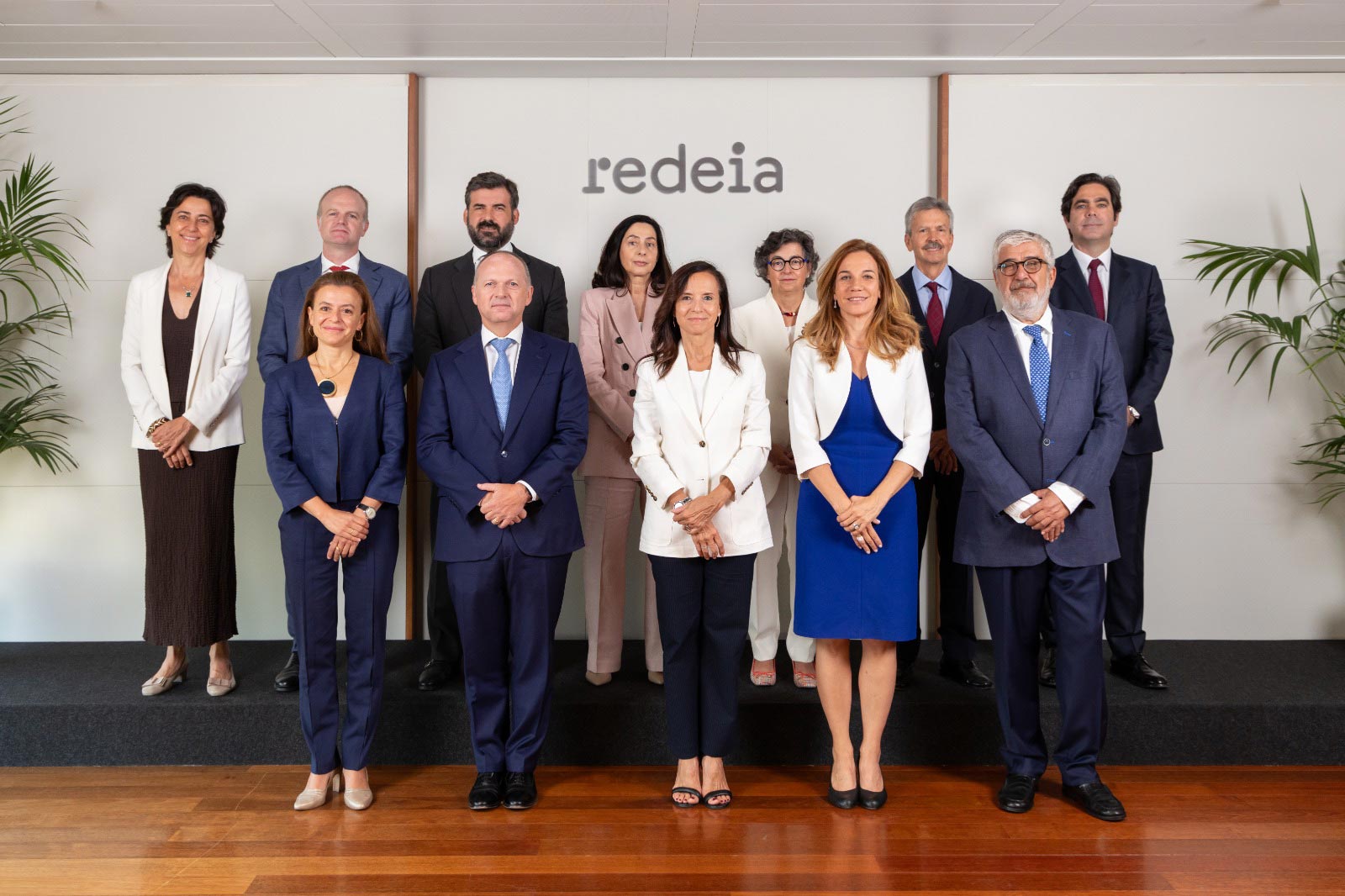
- The event was hosted by Beatriz Corredor, Redeia’s Chairwoman; Joan Groizard, Spain's Secretary of State for Energy; Fernando Ferrando, President of the Fundación Renovables; and Antonella Battaglini, CEO of the Renewables Grid Initiative.
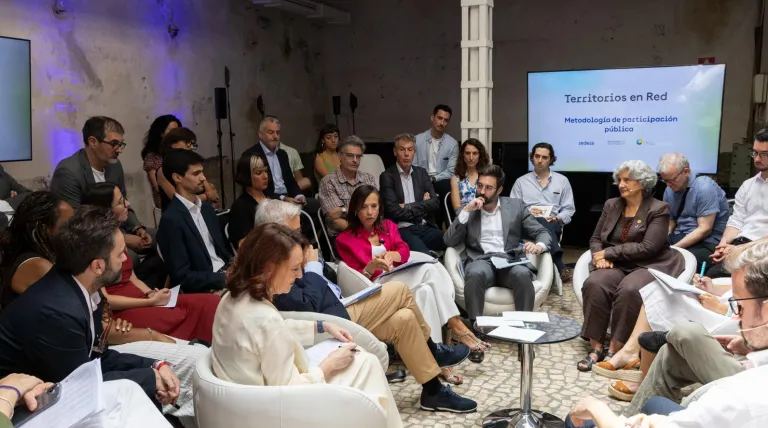
Redeia (Red Eléctrica’s parent company), Fundación Renovables and the Renewables Grid Initiative presented a new methodology today in Madrid. This framework is aimed at reinforcing active listening, early public engagement, local dialogue, transparency and traceability. These elements are considered fundamental drivers in the deployment of electricity grids, specifically the transmission grid.
Held in Madrid, the event brought together representatives from government institutions, the third sector and the energy industry to share insights from the process and foster a wider dialogue on its future application. The event was hosted by Beatriz Corredor, Redeia’s Chairwoman; Joan Groizard, Spain's Secretary of State for Energy; Fernando Ferrando, President of the Fundación Renovables; and Antonella Battaglini, CEO of the Renewables Grid Initiative.
These three entities make up the 'Territorios en Red' alliance. Launched in 2025, its purpose is to explore new ways of local engagement in grid infrastructure development, fostering a more participatory, regionally integrated and socially accepted energy transition.
During the event, Beatriz Corredor pointed out that Redeia is 'aware that grids are not installed on a blank map. Therefore, public engagement must be proactive, ongoing and transparent, allowing room for local communities to exert real influence. The goal is to inform, listen, understand local needs and incorporate that insight into the project's life cycle.'
Joan Groizard stated: 'Given the threat posed by the effects of climate change, the biggest mistake would be to miss the opportunity that the green transition offers the country and fail to prevent villages from continuing to depopulate due to a lack of opportunities, or to find ourselves unable to provide climate control or create environments protected against the climate crisis. ‘We must move forward correctly, together, using a structured method and listening to local communities, as a mutually agreed change of landscape is better than one imposed by the climate emergency.’
Meanwhile, Fernando Ferrando highlighted: 'The deployment of infrastructure must be evaluated beyond technical, economic or electrical capacity terms. We need to incorporate its social, territorial, environmental and landscape implications. The challenge lies not only in building infrastructure, but in doing so in a way that is consistent with a just, democratic and community-focused transition.'
Furthermore, Antonella Battaglini stressed: 'RGI has been driving public engagement in electricity grid planning for decades. Today, we are presenting the experience of three organisations convinced that communities are essential partners in developing faster, more resilient and legitimate grids. Their early-stage involvement builds trust, reduces risks and delivers better outcomes for everyone.’
The methodology in detail
The methodological framework proposed by 'Territorios en Red' stems from the conviction that the energy transition must be aligned with the principles of energy justice, early engagement and democratic governance. Consequently, it defines four objectives: building trusted relationships, incorporating local knowledge, identifying needs and opportunities, and documenting the process – all focused on enhancing the regional integration of infrastructure.
This methodology did not start from scratch; it builds on the long-standing collaboration of Redeia and Red Eléctrica with local communities. Aligned with their Comprehensive Impact Strategy, this approach also involves anticipating impacts, listening to stakeholders and promoting shared-value initiatives. During this time, the framework was also enriched by insights from local, social, environmental, institutional and technical stakeholders. The alliance gathered these contributions through meetings and forums held across Spain’s different autonomous communities to ensure their perspectives and priorities were fully integrated.
Thus, after eighteen months of collaboration, the alliance has transformed this shared experience and knowledge into a structured methodology. Featuring milestones and tools, it can be implemented throughout the project life cycle – from design and permitting to construction and monitoring. These tools can be activated depending on the context, regional sensitivity and the specific stage of the investment cycle. Collectively, they promote early listening and trusted relationships with local communities throughout the useful life of the infrastructure.
Examples of these tools include local socio-environmental assessments and action plans for key stakeholders with tracking mechanisms for the feedback received, as well as new proposals for early-stage engagement structured around monitoring, reporting and feedback milestones. The goal is to incorporate local knowledge, deepen regional understanding and adapt infrastructure design to the specific characteristics and needs of each local area. In this way, this approach helps to anticipate challenges, reduce uncertainties and facilitate a more efficient permitting process that is closely aligned with the reality of the local environment.
The methodology reinforces a grid development model that is more tailored to local regions and aligned with European and international guidelines. It aims to enable a swifter and more efficient deployment of the infrastructure necessary for the energy transition, incorporating early-stage engagement, local knowledge and traceability into the decision-making process.