
We are a global operator of essential infrastructure










Compromiso con la sostenibilidad
Redeia presents its ‘White Paper on Forests’, driving sustainable forest management and highlighting their value as an ecosystem
- This new relationship with forest ecosystems stems from a process of reflection aimed at consolidating the company’s role as a driving force in the positive transformation of forests.
- The white paper identifies six key links between forests and the electricity system and recognises their essential role in protecting infrastructure, tackling climate change, conserving biodiversity and revitalising rural areas.
- The initiative includes a set of actions based on restoration, conservation and environmental education that promote the bioeconomy and local innovation.
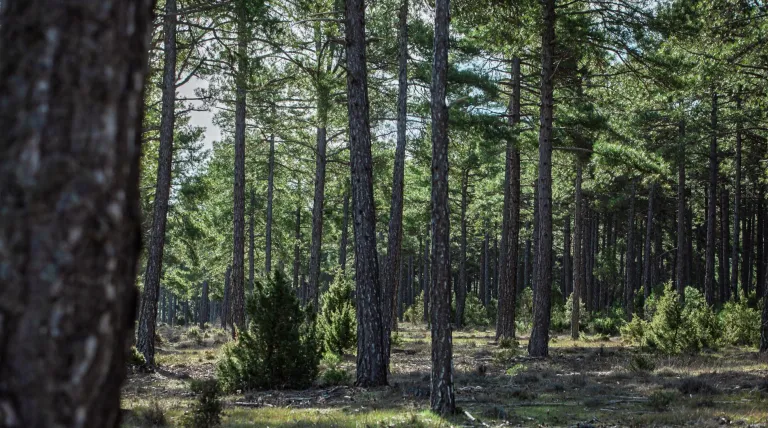
Redeia presents its ‘White Paper on Forests’, a strategic document that redefines the company’s relationship with forest ecosystems with the aim of strengthening climate resilience, conserving biodiversity and promoting sustainable development across local communities.
With this new roadmap, Redeia moves beyond impact mitigation and regulatory requirements to become a source of shared value for forested areas. This new approach takes a more ambitious view of ecological restoration and how the company interacts with forests, integrating both into its corporate strategy to act as a driving force in the transformation of forest areas through a combination of ecological restoration, sustainable management and the enhancement of ecosystem services.
Thus, the White Paper identifies the key links between forests and electricity infrastructure and recognises the essential role of forest ecosystems in protecting these facilities and the critical service they provide, as well as their key function in tackling climate change, conserving biodiversity and revitalising rural areas through innovation, entrepreneurship and cooperation.
Specifically, this transformative strategy is structured around four areas of action: vegetation management to maintain easement areas and ensure access to electricity infrastructure, restoration of degraded areas, support for sustainable forest management, and institutional leadership.
‘The close relationship between infrastructure and the natural environment must evolve towards a model in which we voluntarily generate shared value with the affected areas and actively contribute to their resilience. It is a commitment to the future of local communities, to its natural wealth and its social vitality,’ says Eva Pagán, Corporate Director of Sustainability and Research at Redeia, who highlights that forests are not only an environment to be protected but also a ‘strategic ally to ensure a safer, more efficient electricity system aligned with the ecological transition.’
Actions already in place
To implement this new framework, Redeia has developed a set of actions structured around two pillars: forest action based on sustainable management and restoration, and education and training. The aim is to enhance forests’ capacity to withstand threats such as wildfires, land abandonment or loss of value through ecological restoration measures, the promotion of the bioeconomy, the enhancement of ecosystem services and the development of innovative nature-based solutions, as well as awareness-raising and training programmes in rural areas.
The first initiative under this catalogue is already underway and consists of a partnership with Fundación Naturaleza y Hombre in the eastern mountains of Cantabria: the ‘Floating Forests’ project, which took its first steps in 2026 and includes a range of measures to improve habitats through the removal of non-native vegetation and reforestation with native species, bioeconomy actions such as mushroom cultivation, and the promotion of rural economy through a travelling interpretative ecomuseum. It also includes the education and awareness-raising pillar through workshops and volunteering activities.
The White Paper on Forests is aligned with national and European climate targets. It stems from a process of reflection and guides the company’s future relationship with forests, in line with the 2026–2029 Sustainability Plan approved this year. It is also part of its Comprehensive Impact Strategy, which promotes positive social and environmental impact in Spain and Latin America, the regions where the company operates.
Redeia and its subsidiaries have been working in this field for years, cooperating in the conservation of terrestrial and marine ecosystems through regional partnerships with institutions and organisations. In 2009, it launched the Red Eléctrica Forest project, through which it has contributed to the restoration of 27 forests. Since then, it has planted more than 901,336 trees and shrubs.