
We are a global operator of essential infrastructure





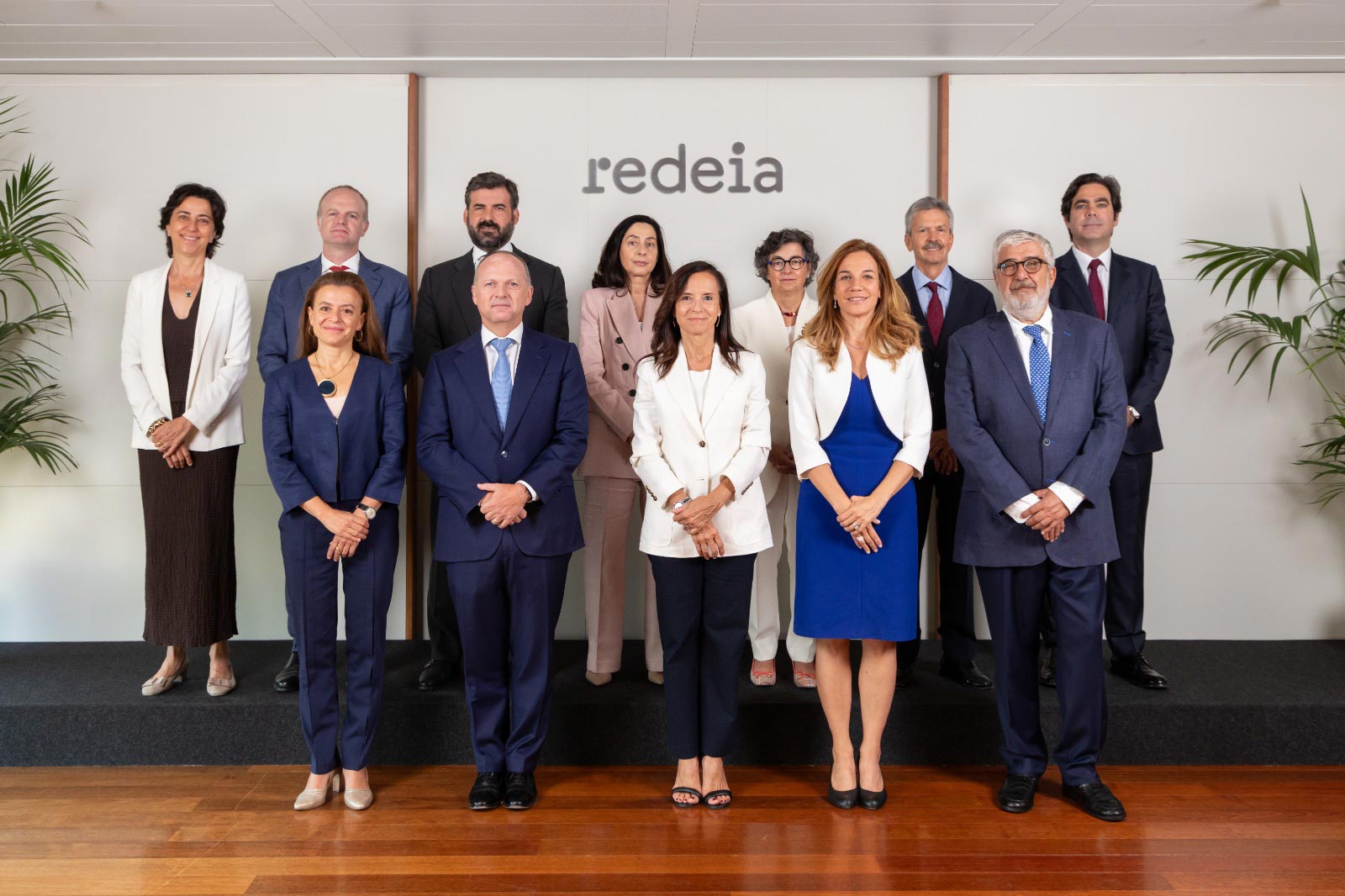

Redeia Sustainability Conference 2026
Redeia strengthens its ambition to drive the energy transition by creating a positive impact on people, ecosystems and local communities
- Generating value beyond its core business is the overarching goal connecting its 2026–2029 Sustainability Plan, its Comprehensive Impact Strategy and its new line of action on Social Innovation
- Institutional, business, scientific and social leaders discussed the future of energy, AI, social protection and nature conservation
- Experts agree on the need to take action to protect Spain's forests against the challenges they face from climate change, rural abandonment and limited forest management
Redeia's ambition for the coming years is to continue driving the energy model of the future – focused on developing and maintaining sustainable, resilient infrastructure – while generating a positive impact on nature, local communities and people through responsible, inclusive practices geared towards creating shared value.
This message was conveyed by its Chairwoman, Beatriz Corredor, during the Sustainability Conference held by the company over the past two days in Madrid, which was opened by the Secretary of State for Energy, Joan Groizard.
'The energy transition is about much more than decarbonisation, which is why it cannot be measured solely by the renewable megawatts integrated into the system or the emissions avoided. The challenge lies in protecting biodiversity and regenerating the ecosystems on which our well-being and that of future generations depend. It also means building an inclusive digital future, where technology is developed responsibly and ethically. And, of course, it involves fostering territorial cohesion, equal opportunities and social well-being,' said Corredor.
Against an international backdrop marked by geopolitical uncertainty, accelerating climate change and the need to strengthen European strategic autonomy, Corredor argued that sustainability must be a central pillar of corporate decision-making. In this vein, Roberto García Merino, CEO of Redeia, explained that the company's new Sustainability Plan shares the same 2026–2029 timeframe as its Strategic Plan, and 'does not run parallel to the business, but rather embeds sustainability across all operations and serves as an inspiring framework guiding every strategic decision'.
Having concluded the previous 2023–2025 plan with a 106% completion rate has enabled the company to embark on a new strategic cycle with more ambitious targets. Key goals include a 50% reduction in direct and energy-related emissions by 2029 – staying on track to achieve climate neutrality by 2050 – and increasing the share of ESG-linked financing to 90% by 2029, having reached 81% in 2025.
A new relationship between electricity infrastructure and forests
Spain is one of the most heavily forested countries in Europe: its forests and woodland cover more than half of the national territory. However, Spain's forests face major challenges stemming from climate change, rural depopulation and abandonment, fragmented land ownership and limited forest management. In fact, only a fifth of this forest area has active management plans in place, increasing its vulnerability to wildfires, pests and extreme weather events.
The experts gathered at the Sustainability Conference agreed on the urgent need for action. Along these lines, Redeia has drawn up its White Paper on Forests (Libro Blanco de los Bosques), which proposes a new way of understanding the relationship between electricity infrastructure and forest land. Through Red Eléctrica, Redeia manages more than 46,000 kilometres of the electricity transmission grid in Spain, slightly more than a quarter of which runs through forested areas. This means that forests are intrinsically linked to the electricity system.
'Forests and infrastructure are not separate realities. Forests influence the security, resilience and adaptation of the electricity system; and infrastructure can become a lever for restoration, ecological connectivity, wildfire prevention and regional innovation,' noted Eva Pagán, Corporate Director of Sustainability and Research at Redeia, during a panel session entitled 'Forests of the future: unlocking the true value of ecosystem services'.
Accordingly, Redeia will launch new initiatives to move towards a net positive impact on biodiversity and improve the condition of ecosystems – particularly forests – shifting from an approach focused on tree planting to one that encompasses restoration, conservation and sustainable management, as well as wildfire prevention and resilience. One example is its support for the Floating Forests (Bosques Flotantes) initiative led by the Fundación Naturaleza y Hombre, which is helping to restore forests in the Eastern Cantabrian Mountains.
A plan and a strategy to make a positive impact on people
Under its 2026–2029 Sustainability Plan, the company will also strengthen its contribution to the socio-economic development of local communities through projects that generate environmental, social and economic value, foster territorial cohesion and help tackle challenges such as depopulation and the just transition.
In this area, Redeia’s Comprehensive Impact Strategy has enabled the launch of more than 360 environmental and social initiatives, backed by an investment of €26 million. Furthermore, the company has introduced a new 2026–2029 Social Innovation Plan that will drive actions focused particularly on gender equality, territorial cohesion, rural development and support for vulnerable groups.
The Sustainability Conference: a space to drive shared solutions
Redeia's 2026 Sustainability Conference has brought together institutional representatives, experts, academics and business leaders in Madrid over the past two days under the theme 'Sustainability: a compass in times of uncertainty'. The aim is to reflect on how to respond to major economic, social and environmental challenges in a context shaped by technological transformation, geopolitical tensions and the effects of climate change.
The conference addressed key issues for the future of Europe and the business sector. Today's sessions focused on some of the main social and technological challenges of our time, such as energy poverty and its impact on health and well-being, the role of artificial intelligence in employment and the changing world of work, the challenges facing multilateralism and global governance, and the need to strengthen social cohesion in an increasingly complex environment.
Yesterday, discussions centred on strategic autonomy and energy security, decision-making in times of uncertainty, the value of forest ecosystems and the resilience of critical infrastructure against extreme weather events.
Redeia's Sustainability Conference is undergoing certification as a sustainable event in accordance with the ISO 20121 standard.